Mirrors are one of the most useful tools in a decorator's kit. They reflect light, create a sense of depth and add a decorative layer to a wall. Placed with care, a mirror can make a dim hallway glow or a small bedroom feel more open.
Place mirrors to catch the light
The best spot for a mirror is often on a wall that sits beside or across from a window at an angle. This bounces daylight deeper into the room without giving you a direct view of the glare. Try holding the mirror in different positions before hanging it to see what it reflects.
Always check what the mirror will reflect. A view of a garden, artwork or a pendant light doubles the beauty. A view of a cluttered corner doubles the clutter.
Choose the right shape
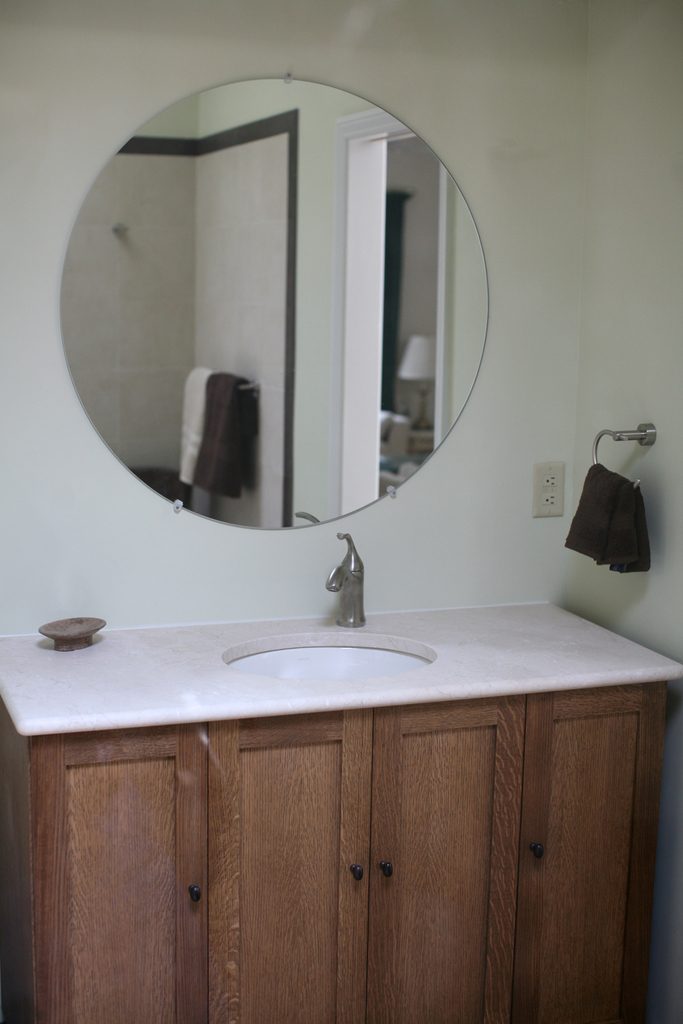
Round mirrors soften rooms full of straight lines, such as kitchens and bathrooms with lots of cabinetry. Tall rectangular mirrors draw the eye up and make ceilings feel higher. Arched mirrors bring a gentle, classic touch to entryways and bedrooms.
Scale it to the furniture
Above a console, sideboard or vanity, a mirror usually looks best when it is a little narrower than the furniture beneath it. Hang it close enough to the surface that the two feel connected, rather than leaving a large gap between them.
Mirrors in small spaces
- In a narrow hallway, a long mirror on one side visually widens the space.
- In a powder room, a statement frame becomes the main decorative feature.
- In a small bedroom, a floor mirror leaned against the wall adds depth and a relaxed feel.
Group smaller mirrors for impact
A collection of small mirrors in different shapes or frames can act like a gallery wall that sparkles. Keep one element consistent, such as frame colour or style, so the group feels planned.
Finally, hang mirrors securely using fixings suited to your wall type and the weight of the frame. A well-placed mirror is a small change that can transform how bright and spacious a room feels.